





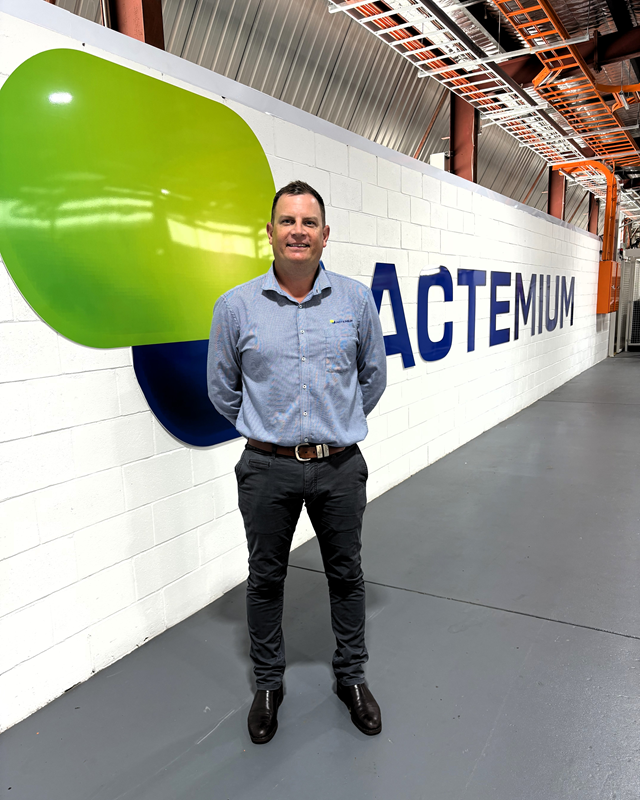
As Queensland prepares for one of the most transformative decades in its infrastructure history, the importance of strategic insight and collaboration has never been clearer. For Simon Truloff, Business Unit General Manager at Actemium Australia, supporting the Queensland Major Projects Pipeline Report (QMPPR) is about more than sponsorship — it’s about shaping the future of the state’s infrastructure with purpose, transparency, and foresight.
A Shared Vision for Queensland’s Infrastructure Future
“Actemium is proud to support the QMPPR because it aligns with our commitment to advancing Queensland’s infrastructure landscape,” Simon explains. “As a business deeply embedded in the delivery of complex, future-focused projects across water, energy, and mobility, we see the report as a vital tool for industry alignment, transparency, and strategic foresight.”
The company’s decision to back the QMPPR reflects a belief in collaborative growth and a shared responsibility for Queensland’s infrastructure future — one that depends on clear data, early planning, and open communication across sectors.
This partnership also underscores Actemium’s broader purpose: contributing meaningfully to the long-term sustainability and capability of Queensland’s infrastructure ecosystem by improving industrial performance.
Turning Data into Strategic Direction
The QMPPR, produced by QMCA in partnership with industry, provides a detailed snapshot of Queensland’s major project pipeline — an essential guide for public and private stakeholders alike. Simon states its data-driven insights give businesses the confidence to plan, invest, and deliver effectively.
“The report provides a clear, data-driven view of the infrastructure pipeline, enabling stakeholders to plan with confidence,” he says. “It fosters informed decision-making, encourages investment, and helps align industry capabilities with government priorities.”
For a state experiencing rapid population growth and gearing up for global events like the 2032 Olympic and Paralympic Games, this level of visibility, is essential to ensure readiness and resilience. Simon adds, “It also plays a pivotal role in supporting project execution, giving the industry the insight to manage resources, scheduling, and risk with greater precision.”
Aligning Capability with Opportunity
Simon highlights the segmentation of projects by sector and region as one of the most valuable aspects of the report. “It allows us to identify where our capabilities in electrical, civil, and integrated infrastructure delivery can be most impactful,” he says. “The insights into government-backed approvals and funding trends also help us assess risk and align our strategic planning with emerging opportunities.”
With operations spanning Wacol, Eagle Farm, the Gold Coast, Toowoomba, and Chinchilla, Actemium is strategically positioned to support both metropolitan and regional growth — a reflection of its commitment to Queensland’s broad infrastructure ecosystem.
Collaboration as a Competitive Advantage
According to Simon, the QMPPR’s greatest contribution is its ability to bring the public and private sectors together around a common understanding of priorities and delivery timelines.
“The QMPPR acts as a common reference point for both government and industry,” he says. “It encourages early engagement, shared understanding of priorities, and alignment on delivery timelines.”
This collaboration, he adds, is essential to tackling the scale and complexity of Queensland’s infrastructure ambitions, ensuring that major projects are delivered efficiently and sustainably.
Anticipating Growth Across Key Sectors
Looking ahead, Actemium sees significant growth across several sectors. “We anticipate strong growth in water infrastructure, renewable energy, and transport — particularly rail and bus rapid transit,” Simon notes.
He points to projects such as The Wave and the Wyaralong Water Treatment Plant as examples of the state’s commitment to sustainable, future-ready infrastructure. “These projects exemplify the innovation and long-term thinking required to meet Queensland’s future needs.”
Beyond their technical scope, Simon emphasises that major projects such as these are the backbone of Queensland’s economic transformation. They generate jobs, improve liveability, and support sustainability over the long term. The QMPPR highlights the opportunities and strategic goals of these investments, boosting confidence in the state’s growth trajectory.
Overcoming Barriers to Delivery
Despite the opportunities, Simon remains pragmatic about the challenges that lie beneath Queensland’s growing infrastructure pipeline.
“The biggest challenges include workforce shortages, supply chain constraints, and the need for greater certainty in project timelines and approvals,” he says.
To overcome these barriers, he advocates for proactive planning, procurement reform, and a coordinated approach to workforce development. “Encouraging innovation, supporting local supply chains, and fostering long-term partnerships between government and industry will ensure we have the capacity and capability to deliver.” he adds.
“Early contractor involvement, supported by clear and coordinated program visibility, will also be key to overcoming delivery barriers and strengthening the state’s project readiness.” By taking a collaborative, solutions-focused approach, Simon believes the industry can maintain momentum and ensure Queensland’s infrastructure ambitions are achieved efficiently and sustainably.
Looking Ahead
As Queensland’s infrastructure pipeline continues to expand, Simon believes the QMPPR will remain a cornerstone of the state’s planning and delivery capability.
“We expect continued momentum in infrastructure investment, particularly in preparation for the 2032 Olympics and in response to population growth and climate resilience needs,” he says. “The QMPPR equips stakeholders with the foresight to prepare — whether through capability building, innovation, or supply chain readiness.”
For Simon, the key to Queensland’s success lies in pairing vision with coordination. As the decade progresses, he sees collaboration between government, industry, and the supply chain as vital to maintaining confidence, improving delivery performance, and securing Queensland’s long-term competitiveness.
“The QMPPR reinforces confidence in the state’s growth trajectory,” he concludes. “It’s not just a report — it’s a roadmap for collaboration, capability, and sustainable success.”
Looking beyond 2032, the true value of the QMPPR lies in how it helps the state transform today’s investment into tomorrow’s infrastructure legacy, building prosperity, resilience, and opportunity for generations to come.