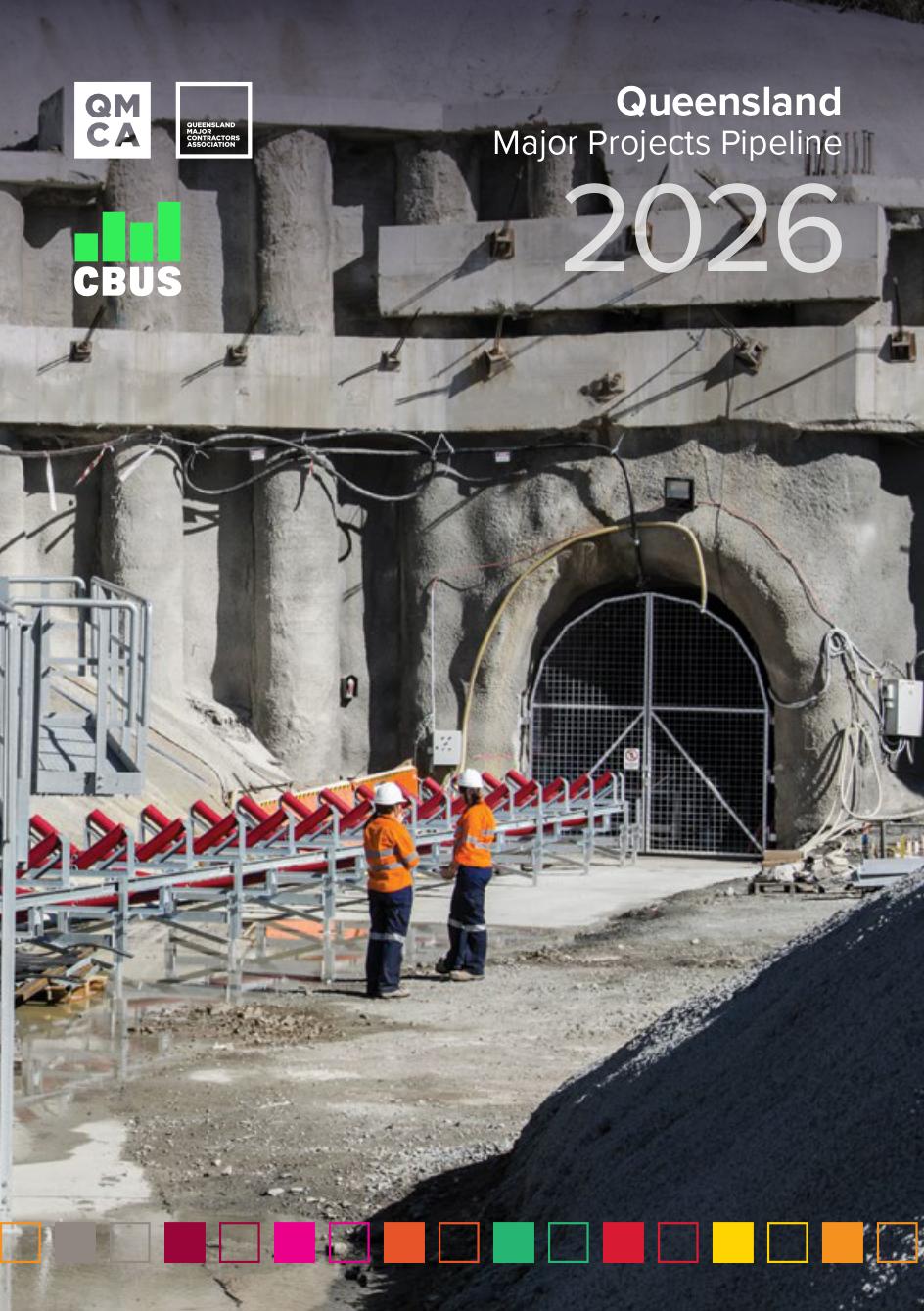
Queensland’s major infrastructure pipeline has grown to $139.5 billion, setting the stage for an unprecedented period of construction activity that will create significant opportunities for the State’s economy, workforce and industry.
The findings are contained in the 2026 Queensland Major Projects Pipeline Report (QMPPR), released today by the Queensland Major Contractors Association (QMCA) in partnership with Cbus Super.
The report identifies $139.5 billion in major project activity over the next five years, up from $127.5 billion in 2025, with $82.5 billion of work already funded.
With approximately 70 per cent of funded projects coming from the public sector, Queensland is entering a sustained period of major infrastructure delivery that will demand in excess of $16 billion in funded construction activity each year on average.
Total pipeline activity is forecast to peak at around $35 billion annually in 2028-29 and 2029-30.
Download The QMPPR Exec Summary
Download the QMPPR Full Report
QMCA CEO Andrew Chapman said the scale of investment reinforced Queensland’s position as a state of opportunity, with the challenge to successfully delivering the pipeline requires continued material improvements in industry productivity, workforce capacity and supply chains.
“Queensland is moving into one of the most significant periods of infrastructure delivery in its history, and the opportunities for our industry, our workforce and our economy are enormous,” Mr Chapman said.
“We have a $139.5 billion pipeline of major projects, more than $82 billion of funded work and a sustained delivery program that will transform communities and support economic growth across the State.
“Having the investment committed is only part of the equation. Our focus must now be on ensuring we have the capacity, capability and productivity to turn that investment into completed infrastructure.
“We cannot expect to deliver this volume of work by continuing to do things the same way.”
Productivity improvements provide a foundation for growth
The report comes as Queensland’s major engineering construction sector continues to recover from a prolonged period of productivity challenges.
Industry output increased to approximately $11 billion in the last financial year, up from $9.5 billion in FY2025, with productivity trending upwards over the past 18 months.
Mr Chapman said improvements in the State’s industrial relations environment, procurement reform, and early initiatives linked to the Queensland Productivity Commission’s investigation into construction productivity were helping create the industry environment needed for project delivery.
“We are starting to see positive results from changes that have been made to the way our industry operates,” Mr Chapman said.
“Improvements in industrial relations settings, greater attention to procurement practices and the renewed focus on productivity are providing a stronger foundation for the delivery task ahead.
“However, there is still considerable work to be done.
“With a number of major enterprise bargaining agreements due for renewal in 2027, it will be important to maintain a stable industrial environment while providing the flexibility needed to manage people, resources and construction programs efficiently.
“Productive construction sites are safe construction sites. Greater flexibility, collaboration and more efficient delivery arrangements will be essential if we are to meet the demands of the pipeline.”
Mr Chapman said sustained annual productivity improvements of between four and eight per cent, supported by workforce growth of between 2.5 and five per cent, could substantially increase the industry’s delivery capacity over the next five years.
He said achieving these improvements would require greater adoption of modern construction methods, standardisation of designs, technology-enabled delivery and procurement models that encourage collaboration and innovation.
“We need to look at productivity across every part of the project lifecycle, from planning and design through to procurement and construction.
“That includes eliminating unnecessary duplication of administrative and management resources, better coordinating programs of work and adopting procurement approaches that deliver greater certainty around time, cost and risk.
“These are practical changes that can help us deliver more infrastructure with the resources available.”
Workforce demand will require a national response
Workforce availability remains one of the most significant challenges facing Queensland’s construction industry.
The report forecasts workforce demand across the identified major projects will approach 40,000 workers in 2028-29, including approximately 25,000 workers required for funded projects alone.
Brisbane and the Sunshine Coast are expected to account for more than 40 per cent of the funded project workforce demand.
Mr Chapman said Queensland would need to continue attracting new entrants to the construction industry while creating opportunities for experienced workers from interstate and overseas.
“Queensland is going to need thousands of additional skilled workers to deliver this pipeline, and that represents an enormous opportunity for people looking to build careers in our State,” he said.
“Training, apprenticeships, upskilling and initiatives such as Construction Skills Queensland’s training plan are critical to developing the workforce we need.
“We also need to look beyond Queensland.
“With New South Wales and Victoria projected to have a combined construction workforce surplus of between 48,000 and 57,000 workers by 2028-29, there is a significant opportunity to attract experienced workers and their families to Queensland.”
Mr Chapman said QMCA was working with the Queensland Government to identify opportunities to attract specific skills and additional capacity from interstate and, where appropriate, internationally.
He warned that workforce accommodation would also need to be addressed, particularly in regional locations facing increased construction activity.
“Attracting workers is only one part of the challenge. We also need to ensure they have somewhere to live.
“Practical short-term workforce accommodation solutions will be essential in key locations to support project delivery without placing further pressure on already constrained local housing markets.”
Supply chain investment can create a lasting legacy
The report also identifies growing pressure on construction supply chains, particularly steel fabrication, reinforcement and aggregate supply.
With construction costs forecast to increase by approximately seven per cent annually in coming years, subject to global economic conditions, Mr Chapman said expanding domestic supply chain capacity was essential to managing costs and providing greater certainty for project delivery.
“The scale of this pipeline provides an opportunity to do more than simply deliver individual projects. It gives us the chance to strengthen Queensland’s construction supply chains for decades to come,” he said.
“We need to build greater capacity in steel fabrication and reinforcement manufacturing through investment, early engagement and more coordinated programs of work.
“We also need practical solutions to increase aggregate supply, including reviewing restrictive operating conditions on existing quarries, facilitating approvals for new sources and expanding the use of recycled construction materials.
“These are areas where government and industry can work together to create genuine long-term benefits for Queensland businesses and communities.”
A generational opportunity to build a stronger industry
Mr Chapman said the pipeline offered an opportunity to build a lasting legacy that extends well beyond the infrastructure itself.
“Queensland has an opportunity to emerge from this period with a larger, more skilled and more productive construction workforce, stronger local supply chains and more efficient approaches to project development and delivery,” he said.
“We have an opportunity to attract people and investment from across Australia, accelerate innovation and establish the capability that will support our industry long after the current pipeline has been delivered.
“The challenges are significant, but importantly, many of the solutions are already being developed through collaboration between government and industry.
“Our task now is to build on that progress, maintain the momentum for reform and ensure Queensland can capitalise on the opportunities ahead.
“This is a defining period for our industry and our State. If we get the settings right, the benefits will be felt for generations to come.”